As artificial intelligence seamlessly embeds itself into education, healthcare, systems architecture, and daily communication, establishing strong ethical frameworks is no longer optional—it is critical. The rapid advancement of generative models and automated decision-making brings immense potential, but it simultaneously introduces profound challenges regarding data privacy, algorithmic bias, human autonomy, and digital equity. To build a future where technology elevates humanity rather than compromising it, we must critically analyze how AI impacts diverse populations and institutions. The following curated reading list offers vital insights from leading researchers on navigating these complex ethical boundaries.

Ethical principles for artificial intelligence in K-12 education
The conversation surrounding ethics and AI in education must include a piece on the protection of children and their rights as both users of AI tools, and recipients of AI products. This article analyzes the ethical guidelines of the Institute for Ethical AI in Education and lays out the principles that support adolescents' rights including “Transparency; justice and fairness; non-maleficence; responsibility; privacy; beneficence; freedom and autonomy; trust; dignity; sustainability; and solidarity” (Adams, et al., 2023).
Adams, C., Pente, P., Lemermeyer, G., & Rockwell, G. (2023). Ethical principles for artificial intelligence in K-12 education. Computers and Education: Artificial Intelligence, 4, 100131. https://doi.org/10.1016/j.caeai.2023.100131

“Won’t somebody please (actually) think of the children?” AI ethics for children: A scoping review.
Continuing the discussion of AI ethics and its relation to children, this research piece takes a hard look at the literature. Using the UNESCO principles for ethical AI the researchers identify a significant number of sources dedicated to applying each principle to children. Their findings show that awareness and literacy are the most prominent ethical principles included in their sources, which “promoted children’s understanding of AI technologies and integrating ethical considerations into educational curricula and pedagogy” (Collyer-Hoar and Rubegni, 2025). Most interesting to me was the finding that the right to privacy and data protection, safety and security, human oversight, and transparency were all addressed in the least amount of sources in their study with less than 10. This leads me to suppose that more can be done to support these principles in practice.
Collyer-Hoar, G., & Rubegni, E. (2025). “Won’t somebody please (actually) think of the children?” AI ethics for children: A scoping review. ACM Journal on Responsible Computing, 2(2), 1–37. https://doi.org/10.1145/3745031
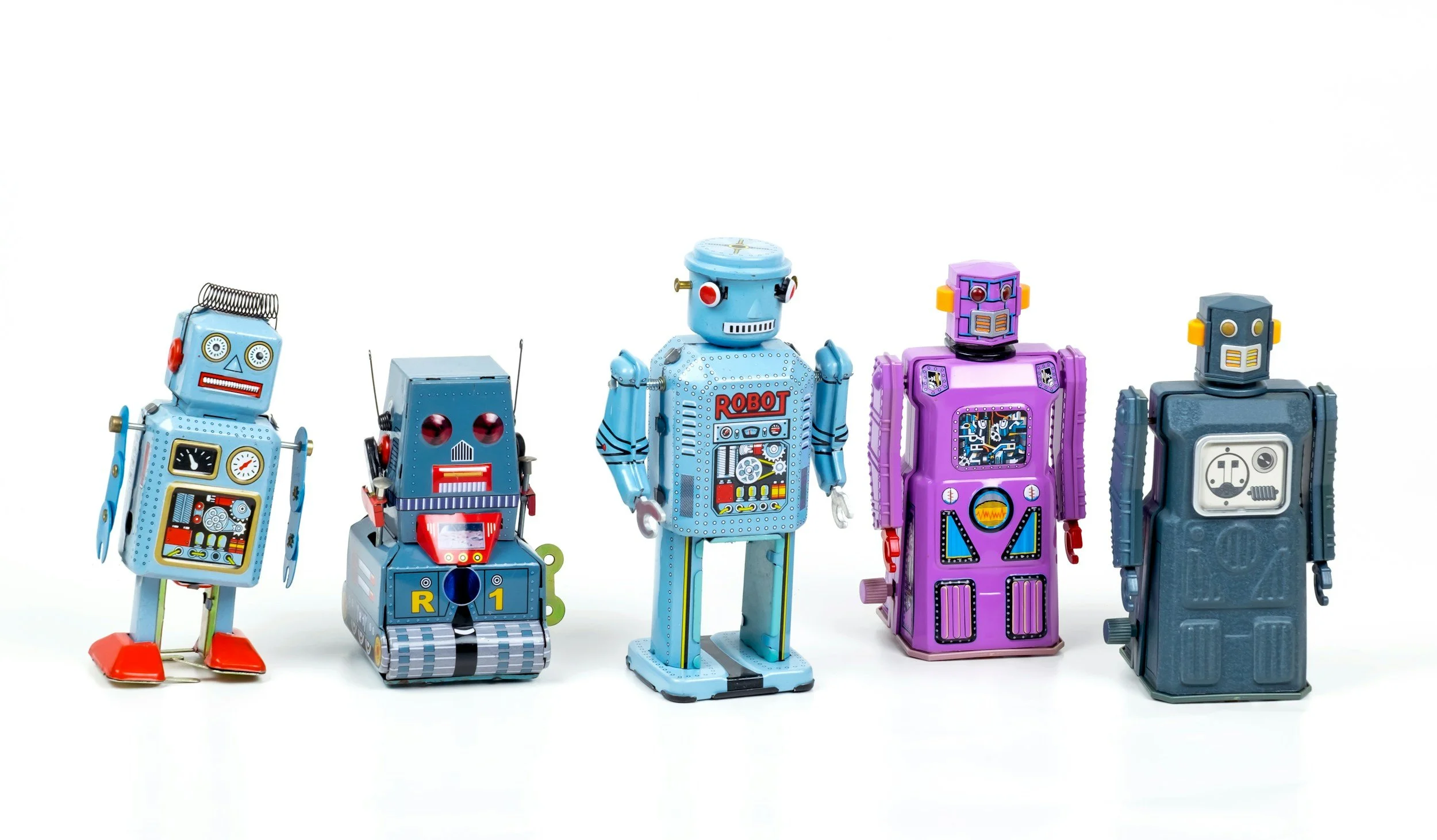
AI agents with friendly faces and adorable bodies can distract you from serious risks
A little-considered area of the AI ethical conundrum is its packaging. This article explores the risks associated with the “cuteness” factor in AI. One example used is Meta’s Muse Charm, which is a small device that allows easy access to its AI personal assistant. It utilizes a character-like interface to put the user at ease. The authors highlight the higher likelihood of users allowing access to important personal data without understanding the fine print, because the interface is approachable, which masks potential privacy concerns. “Making a technology cute can influence what people notice about it and what they overlook. A charming AI assistant may seem more approachable and less threatening, potentially drawing attention away from questions about data collection, privacy, security and surveillance” (De, A., & Maddox, J., 2026). Their answer to this problem, clearer transparency.
De, A., & Maddox, J. (2026). AI agents with friendly faces and adorable bodies can distract you from serious risks. https://doi.org/10.64628/aai.avfhrgsfj

Ethics, AI, and irresistible temptations
In this essay written by Kathy Hytten (2026), questions are explored surrounding scholarship and the use of AI in researching, developing ideas, and writing. She eloquently describes her experience of studying the limits of AI as a “thought partner” by utilizing a generative AI assistant to the fullest extent. She says, “The experience left me with a strange feeling: not guilt exactly, but a sense that I’d gotten away with something. I hadn’t cheated. I hadn’t copied. But I had—somehow—bypassed something. Something that, until now, I’d assumed was integral to the scholarly process. Is something lost when the struggle over ideas is outsourced to a machine?” (Hytten, 2026). There appears to be a tension in her experience that is valuable. Hytten goes on to discuss her very conversation about her experience with the ChatGPT tool itself. The introspection on the matter is both jarring and motivating.
Hytten, K. (2026). Ethics, AI, and irresistible temptations. Educational Theory, 76(1), 140–147. https://doi.org/10.1111/edth.70053
Artificial intelligence or natural stupidity?
This article provides an interesting perspective on the morality of AI from a religious point of view. McGirr (2026) quotes Pope Leo XIII saying, “Our relationship with life seems to be in crisis today. Everything that appears as a ‘limit’—incapacity, illness, old age, suffering, vulnerability—tends to be seen primarily as a defect to be corrected, rather than as a reality through which our humanity matures and opens itself to relationship. And yet we must remember that humanity flourishes not despite limitations, but often through them” (p. 13). The author reminds us that our reliance on AI technology should not limit our ability to feel and experience the world for ourselves. It is a welcome perspective outside of that approaches the discussion with fresh eyes.
McGirr, M. (2026). Artificial intelligence or natural stupidity? Eureka Street, 36(10), 10–13.

Teaching with generative artificial intelligence (GenAI): Should educators trust AI to guide student learning?
This article provides a good example of what I see in much of the literature on the ethical use of AI. Oben et al. (2025) speak of “the immense promise for transforming education” that AI provides, while also speaking of the issues of “accuracy, algorithmic bias and the potential erosion of the teacher-student relationship” (p. 11). Ideas of human-AI collaboration in education are stressed here, suggesting that there must be balance as AI is more widely instituted in educational settings. I personally find this concerning in that while it is recognized that educators cannot be fully replaced by these technologies, it is entirely possible that they will be less widely regarded as a valuable resource and therefore, there will be less investment in the educators themselves.
Oben, A. I., Hui, X., Bahtilla, M., & Quanguo, L. (2025). Teaching with generative artificial intelligence (GenAI): Should educators trust AI to guide student learning? Innovations in Education & Teaching International, 1–14. https://doi.org/https://doi.org/10.1080/14703297.2025.2587333

Optimizing schools case study
This is one of multiple simulated case studies focused on encouraging conversations and dialogue found at https://aiethics.princeton.edu/case-studies/case-study-pdfs/. This example depicts a high school on the verge of educational collapse, with high failure and dropout rates. The school employs an AI data-collection agency intended to analyze the reasons behind its troubles and present solutions. Though the program was successful, parents and students were not notified (issues of transparency), student data was used to determine possible intervention needs (bias and dehumanization), and student data was distributed to an organization outside the school without consent (privacy). This resource provides a great opportunity for reflection about ethical utilization of AI.
Optimizing schools case study: 3. (n.d.). Retrieved November 14, 2026, from https://aiethics.princeton.edu/wp-content/uploads/sites/587/2018/10/Princeton-AI-Ethics-Case-Study-3.pdf

Towards responsible artificial intelligence adoption: Emerging and existing ethical issues in Africa.
This article provides an interesting perspective in the discussion of ethical AI use as it pertains to the African continent stating, “Africa faces unique challenges connected to its socio-cultural fabric and underdeveloped AI regulatory frameworks…there is a need to pay attention to emerging ethical issues around AI adoption to safeguard the continent’s socio-cultural fabric from disintegration” (Sule, D.F., 2026). Our perspective does not often account for these issues in our consideration of AI ethics. The article goes on to discuss digital colonialism and the imposition of foreign values and systems. I would encourage further reading into this topic, as it can inform how we may colonize our own cultures in the West.
Sule, D. F. (2026). Towards responsible artificial intelligence adoption: Emerging and existing ethical issues in Africa. Sci, 8(3), 60. https://doi.org/https://doi.org/10.3390/sci8030060

Ethical challenges in the use of information technology and artificial intelligence in healthcare practice.
The most fundamental questions that this article seeks to answer are “Does technology exclusively serve the well-being of the individual, or can it violate their rights, such as privacy and dignity? Is the use of personal data in digital systems always safe? Will the responsibility for a mistake be taken by humans or machines?” (Vasić, 2026, p. 197-198). Vasić (2026) addresses arguments of AI bias, stating that “The lack of diversity in the data means algorithms generate precise results for the ‘dominant’ population, while for less represented and/or marginalized groups, the risk of errors in diagnosis and health risk assessment increases (p.198). This is saying here that the models that AI uses to increase the breadth of its knowledge base comes from information that is used to train it and people groups can fall through the cracks which can pose healthcare risks.
Vasić, M. (2026). Ethical challenges in the use of information technology and artificial intelligence in healthcare practice. Medical Review / Medicinski Pregled, 79(7/8), 197–200. https://doi.org/10.2298/MPNS2608197V